
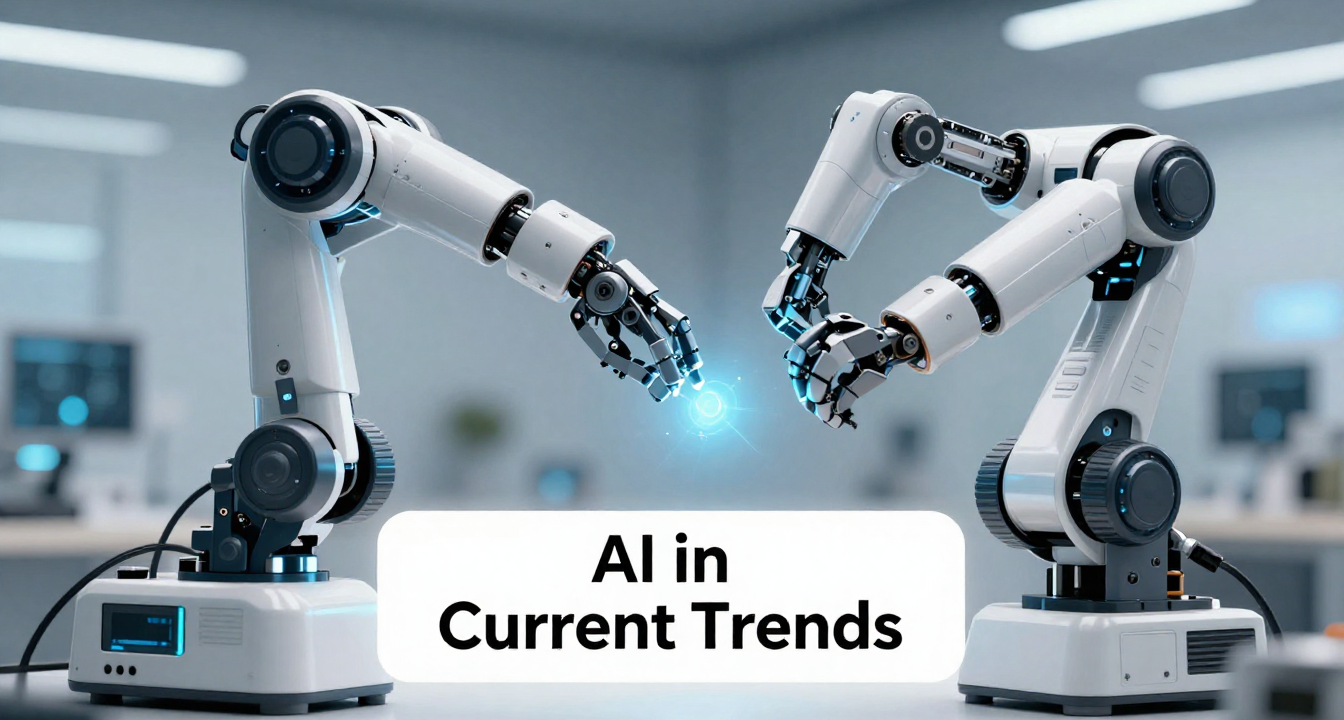
The world of robotics has transformed dramatically over the past decade, with intelligent machines now handling tasks that once seemed impossible. At the heart of this revolution lies a powerful force: advanced algorithms that teach robots how to think, learn, and act independently. These computational systems have become essential to modern robotics, enabling machines to navigate complex environments, make real-time decisions, and continuously improve their performance.
When you look at today’s robots, you’re witnessing the direct result of sophisticated machine learning approaches working behind the scenes. These technologies allow robots to process vast amounts of data, recognize patterns, and adapt to new situations without explicit programming for every possible scenario. The convergence of artificial intelligence and robotics represents one of the most significant technological shifts of our time, reshaping industries from manufacturing to healthcare.
How Modern Robots Learn and Adapt
Robots today don’t simply follow pre-programmed instructions like machines from decades past. Instead, they employ learning algorithms that enable them to understand their surroundings and improve through experience. Supervised learning, for instance, trains robots by providing examples of correct behaviors. You feed the system thousands of images labeled as obstacles or safe pathways, and the robot learns to distinguish between them on its own.
Unsupervised learning takes this a step further by allowing robots to discover patterns in data without human guidance. This approach proves invaluable when you’re dealing with massive datasets where labeling every example becomes impractical. Reinforcement learning represents another crucial technique, where robots learn by trial and error, receiving rewards for successful actions and penalties for failures. This method has proven particularly effective for training robots to complete complex manipulation tasks and navigate challenging terrain.
The beauty of these approaches lies in their flexibility. When you deploy a robot equipped with machine learning algorithms, it doesn’t remain static. Instead, it continuously gathers information from its environment, processes this data, and refines its decision-making processes. This adaptive capability means robots become more efficient and capable over time, much like humans learning from their experiences.
Computer Vision and Perception Systems
One of the most remarkable applications of machine learning in robotics involves computer vision. Robots need to see and understand their world, which requires processing visual information in real time. Deep learning networks trained on millions of images enable robots to recognize objects, detect faces, and identify specific features with remarkable accuracy.
When you equip a robot with these visual capabilities, it can perform tasks that demand precision and awareness. Manufacturing robots can inspect products for defects at superhuman speeds. Autonomous vehicles can distinguish pedestrians from obstacles and respond appropriately. Surgical robots can identify tissue types during delicate operations. These accomplishments stem from machine learning algorithms that have absorbed patterns from enormous training datasets.
Sensor fusion represents another essential component of modern robot perception. Your robot doesn’t rely on a single camera or sensor. Instead, machine learning algorithms integrate information from multiple sources—cameras, lidar, radar, and touch sensors—creating a comprehensive understanding of the environment. This redundancy improves safety and reliability, particularly in critical applications.
Autonomous Navigation and Decision Making
Getting a robot from point A to point B sounds simple until you add real-world complexity. Obstacles appear unexpectedly, terrain changes, and dynamic environments present moving targets. Machine learning algorithms handle this complexity by learning optimal pathways, predicting obstacles, and making split-second navigation decisions.
Path planning algorithms use machine learning to evaluate countless possible routes and select the most efficient one. When you deploy a delivery robot in an urban environment, it must navigate crowded sidewalks while avoiding pedestrians and parked vehicles. Neural networks trained on real-world navigation scenarios enable this capability. The robot learns not just to follow the shortest geometric path, but to anticipate human movement and choose socially appropriate routes.
Decision-making systems in robots rely heavily on predictive models. Machine learning algorithms analyze the current state of the environment and forecast what will happen next. This predictive capability allows robots to be proactive rather than merely reactive. When you want a robot to work efficiently alongside humans, this foresight becomes invaluable for safety and productivity.
Natural Language Processing in Robotics
Robots increasingly interact with humans through language, making natural language processing a critical technology. Machine learning models trained on vast text and speech datasets enable robots to understand commands, ask clarifying questions, and provide helpful responses.
Voice recognition systems use deep learning to distinguish individual speakers and understand speech in noisy environments. When you give a robot a verbal instruction, transformer models process your words to extract meaning and intent. This breakthrough has made human-robot interaction more intuitive and accessible to users without technical training.
Current Innovations Shaping Robot Intelligence
The landscape of machine learning in robotics continues evolving rapidly. Transfer learning has emerged as a game-changer, allowing robots to apply knowledge gained in one context to entirely new situations. Rather than training a robot from scratch for every task, you can leverage algorithms trained on millions of examples and adapt them to your specific needs.
Federated learning represents another emerging trend. Instead of centralizing all robot data in one location, this approach trains algorithms across distributed robots while maintaining privacy. This method proves particularly valuable when deploying robot fleets that learn from collective experience while protecting proprietary information.
Meta-learning, or “learning to learn,” stands at the frontier of robotics research. You can train robots to adapt quickly to new tasks with minimal examples, much like humans who transfer existing knowledge to unfamiliar situations. This capability will enable robots to function effectively in unpredictable environments without extensive retraining.
Practical Applications Across Industries
The impact of machine learning-driven robotics extends across virtually every sector. In manufacturing, predictive maintenance algorithms analyze sensor data to identify equipment failures before they occur, reducing downtime and costs. Quality control robots use computer vision to inspect products at speeds and consistency levels impossible for human workers.
Healthcare benefits tremendously from intelligent robotics. Surgical robots equipped with machine learning algorithms provide surgeons with enhanced dexterity and precision. Diagnostic robots analyze medical imaging to detect abnormalities. Rehabilitation robots learn individual patient patterns and adjust their movements to provide optimal therapy.
Logistics and warehousing have been revolutionized by autonomous mobile robots. These machines navigate complex environments, pick items with precision, and optimize routes in real time. When you consider the speed and efficiency of modern fulfillment centers, much of the credit belongs to machine learning algorithms that coordinate robot movements and predict demand patterns.
Challenges in Implementing Intelligent Robotics
Despite remarkable progress, significant challenges remain. Training robust machine
Real-World Applications of AI-Powered Robots Across Different Sectors
Artificial intelligence in robotics has moved beyond laboratory experiments and science fiction scenarios. Today, intelligent robots powered by AI are transforming how businesses operate across nearly every industry. These machines learn from their environments, adapt to new tasks, and solve problems that once required human workers. Understanding how AI-powered robots function in real-world settings helps you see the true potential of this technology.
The manufacturing sector stands as one of the most significant beneficiaries of AI-driven robotics. Factories worldwide now deploy intelligent robots on production lines to handle repetitive assembly tasks with remarkable precision. These robots don’t just follow pre-programmed instructions anymore. They use machine learning algorithms to optimize their movements, reduce waste, and improve quality control. When a defective product appears, AI-powered vision systems instantly detect the problem and alert human supervisors. This combination of speed and accuracy has dramatically increased production efficiency while reducing costs for manufacturers.
In healthcare facilities, AI-powered robots are saving lives and improving patient care in ways that were unimaginable just a few years ago. Surgical robots equipped with artificial intelligence assist doctors during complex procedures, providing steady hands and enhanced precision that human surgeons cannot always achieve. These robots analyze real-time data during surgery, helping physicians make better decisions. Beyond the operating room, robots with AI capabilities handle dangerous tasks like disinfecting hospital rooms or delivering medications. During the pandemic, many hospitals relied on autonomous disinfection robots to protect healthcare workers from viral exposure. This technology continues to evolve, with robots now capable of detecting patient deterioration and alerting medical staff before emergencies occur.
The logistics and warehouse industry has experienced a dramatic transformation thanks to AI in robotics. Warehouses that once required hundreds of workers to pick and pack items now employ intelligent robots that navigate complex layouts independently. These robots use AI to learn optimal paths through warehouses, predict which items customers will order, and organize inventory more efficiently. Leading robotics companies have developed systems where robots and humans work side by side, with AI algorithms coordinating their efforts. Orders get fulfilled faster, fewer mistakes occur, and workers focus on tasks requiring human judgment and creativity instead of repetitive physical labor.
Agriculture represents another frontier where AI-powered robots are making substantial impacts. Farming robots equipped with computer vision and machine learning can identify individual plants, detect diseases, and apply treatments with surgical precision. These robots work around the clock, monitoring crop health and soil conditions continuously. Autonomous harvesting robots use AI to determine when fruits and vegetables reach optimal ripeness, picking them gently without damage. Some agricultural AI robots even predict weather patterns and adjust irrigation systems automatically. For farmers facing labor shortages and rising costs, these technologies offer practical solutions that increase yields while reducing environmental impact.
In retail environments, AI-powered robots enhance customer experience and streamline operations. Shelf-scanning robots equipped with artificial intelligence move through stores, checking inventory levels and identifying misplaced items automatically. Mobile robots with AI capabilities assist customers by providing product information and guiding them to specific locations within stores. Some retailers have deployed robots that analyze customer behavior patterns, helping managers understand shopping trends and optimize store layouts. These intelligent systems work continuously, gathering data that helps businesses serve customers better.
The security and infrastructure maintenance sectors benefit significantly from AI robots that can access dangerous locations. Inspection robots powered by artificial intelligence climb towers, inspect bridges, and examine pipelines without risking human lives. These robots use advanced sensors and AI algorithms to detect structural damage, corrosion, and safety hazards that human inspectors might miss. By identifying problems early, companies prevent costly failures and accidents. Security robots with AI capabilities patrol facilities around the clock, learning patterns of normal activity and alerting personnel when suspicious behavior occurs.
The construction industry increasingly turns to AI-powered robots for tasks that are physically demanding or hazardous. Robotic systems equipped with artificial intelligence can perform bricklaying, concrete pouring, and structural inspections with remarkable speed and consistency. These robots learn from previous projects, improving their techniques and adapting to different site conditions. Construction companies using AI robots report fewer safety incidents, faster project completion, and higher quality results.
| Industry Sector | Primary Applications | Key Benefits |
|---|---|---|
| Manufacturing | Assembly, quality control, material handling | Increased productivity, reduced defects, lower costs |
| Healthcare | Surgery assistance, disinfection, patient monitoring | Enhanced precision, improved safety, better outcomes |
| Logistics | Picking, packing, inventory management | Faster fulfillment, fewer errors, optimized workflows |
| Agriculture | Crop monitoring, harvesting, disease detection | Higher yields, reduced waste, sustainable practices |
| Retail | Inventory scanning, customer assistance, analytics | Better customer service, accurate stock levels, insights |
| Infrastructure | Inspections, maintenance, monitoring | Early problem detection, reduced downtime, safety |
| Construction | Bricklaying, concrete work, site inspections | Faster completion, higher quality, fewer accidents |
Education and training environments are beginning to incorporate AI-powered robots that help students learn complex concepts. These robots adapt their teaching methods based on individual student needs, providing personalized learning experiences. Younger students benefit from robots that make learning engaging and interactive, while older students use advanced robotic systems to understand AI and automation principles firsthand.
Looking at current trends in AI-powered robotics reveals several important patterns. Robots are becoming more collaborative, working alongside humans rather than replacing them entirely. Artificial intelligence enables robots to understand context and make decisions based on complex situations rather than simple rules. The cost of deploying AI robots continues to decrease, making the technology accessible to smaller businesses and organizations. Companies are investing heavily in training programs to help workers adapt to this technological shift, ensuring that humans and AI robots can complement each other effectively.
The future looks promising as AI in robotics continues evolving. Industry experts predict that robots will become even more autonomous, capable of handling tasks we haven’t yet
Challenges and Ethical Considerations in AI Robotics Development
The intersection of artificial intelligence and robotics has transformed industries worldwide, yet this rapid advancement brings complex problems that society must address carefully. As machines become smarter and more autonomous, we face tough questions about safety, responsibility, and what’s right for humanity. Understanding these obstacles helps us build better robots that benefit everyone rather than cause harm.
Safety Risks in Autonomous Systems
When robots operate without constant human control, safety becomes a major concern. Self-driving robots and autonomous machines make split-second decisions that can affect people’s lives. If an AI system fails or makes a wrong choice, someone could get hurt. Developers must test these systems thoroughly before releasing them into the real world.
One critical issue involves unpredictable situations. Engineers can program robots to handle common scenarios, but what happens when something unusual occurs? A self-driving robot might encounter weather conditions, obstacles, or human behavior it wasn’t trained to manage. This unpredictability puts people at risk and requires ongoing improvements to AI training methods.
Hardware failures also pose serious dangers. A robot’s sensors might malfunction, causing it to misinterpret its surroundings. Its mechanical parts could break down unexpectedly. These physical breakdowns combined with AI errors create dangerous situations that need proper safeguards and fail-safe systems.
Accountability and Responsibility Issues
When an AI-powered robot causes damage or harm, who is responsible? This question remains unclear in many legal systems. Should manufacturers be held liable? What about programmers or companies that deployed the robot? Current laws weren’t designed for machines that make independent decisions.
This accountability gap creates real problems. If a robot injures someone, the victim needs compensation, but determining fault becomes complicated. Was it a design flaw? Did the robot operator use it incorrectly? Did the AI system behave unexpectedly despite proper programming? Without clear answers, justice becomes difficult to achieve.
Many countries are working to update their legal frameworks, but progress is slow. International standards organizations are developing guidelines, yet a unified global approach remains distant. This creates confusion across borders and different industries where AI robotics operate.
Bias and Discrimination in AI Algorithms
AI systems learn from data, and if that data contains bias, the robot will inherit that bias. Imagine a hiring robot trained on historical hiring decisions. If those decisions favored certain groups over others, the robot will continue that discrimination. This perpetuates unfair treatment and violates principles of equality.
Bias appears in many forms. Gender bias, racial bias, and socioeconomic bias can all hide within training datasets. A robot designed to identify criminal suspects might target specific communities more often if trained on biased police data. These systems then affect real people’s lives in harmful ways.
Detecting and removing bias requires constant effort. Teams must audit AI systems regularly, test them across different populations, and update their training data. Yet many companies skip these steps to save time and money, allowing discrimination to persist in their robots.
Job Displacement and Economic Impact
As AI robotics become more capable, they replace human workers in factories, warehouses, and service industries. Workers lose jobs that provided income for their families. Communities that depended on manufacturing jobs face economic decline. While automation increases productivity, the human cost is substantial and often overlooked.
This displacement isn’t temporary. Unlike previous technological shifts, some jobs won’t return because robots outperform humans in those roles. Retraining programs help some workers, but they’re often underfunded and insufficient. People who spent decades learning a trade face uncertainty about their future.
The economic benefits of AI robotics flow mainly to companies and wealthy investors, while workers bear the burden. This creates growing inequality and social tension. Society must find ways to share the gains from AI advancement more fairly among all people affected by it.
Privacy and Data Security Concerns
AI robots collect massive amounts of data to function effectively. Cameras, microphones, and sensors gather information about people’s movements, conversations, and behaviors. This data raises serious privacy questions. Who accesses this information? How is it stored? Can governments or companies misuse it?
Robots in homes, workplaces, and public spaces constantly observe people. This surveillance creates an environment where privacy disappears. Even if current intentions are good, future governments or corporations might use this data for oppression or control. Once privacy is lost, it’s nearly impossible to reclaim.
Cyberattacks present another danger. If hackers break into a robot’s systems, they access private information and potentially control the robot. Healthcare robots, for example, might expose patient medical records. Military robots could be turned against their operators. Cybersecurity experts warn that our current protections are insufficient for this interconnected future.
Environmental and Resource Considerations
Building millions of robots requires rare materials and tremendous energy. Mining for minerals damages ecosystems. Manufacturing creates pollution. Running these machines consumes significant electricity. The environmental cost of widespread AI robotics adoption deserves serious attention in development plans.
Electronic waste from discarded robots becomes another problem. Most robots contain materials that don’t break down naturally and can poison soil and water. Proper recycling systems don’t yet exist at scale. As robot populations grow, this waste problem will become worse without intervention.
Developers should consider the complete environmental impact from creation to disposal. Designing robots with recyclable materials, using renewable energy, and minimizing resource extraction can reduce harm. However, profit motives often override environmental concerns, requiring regulation and oversight.
Ethical Guidelines and Standards Development
The robotics industry recognizes that ethical guidelines are necessary. Professional organizations, academic institutions, and advocacy groups are working to create standards for responsible AI robot development. These guidelines address transparency, fairness, safety, and human dignity.
However, guidelines without enforcement mean little. Companies must commit to following ethical principles even when it costs more or slows development. Government regulations could mandate compliance, but regulators often lag behind technology. This creates a gap where businesses operate in gray areas, avoiding obvious harm while skirting responsibility.
Global cooperation improves ethical standards.
The Future Landscape of Artificial Intelligence and Robotic Innovation
Artificial intelligence and robotics are reshaping how we work, live, and solve complex problems across nearly every industry. Understanding the current direction of these technologies helps you prepare for the changes ahead. The integration of AI with robotic systems creates machines that can learn, adapt, and perform tasks with remarkable precision.
How AI is Transforming Robot Capabilities
Modern robots equipped with artificial intelligence can now make decisions without constant human guidance. Machine learning algorithms enable these machines to improve their performance over time by analyzing data from their operations. When a robot encounters a new situation, it doesn’t simply follow pre-programmed instructions—it evaluates the scenario and determines the best course of action.
Computer vision powered by AI allows robots to see and interpret their surroundings with incredible accuracy. This technology helps robots recognize objects, understand spatial relationships, and navigate complex environments. In manufacturing facilities, vision-equipped robots can identify defects in products faster and more consistently than human inspectors. The combination of visual perception and decision-making intelligence creates robots that are increasingly autonomous and adaptable.
Natural language processing is another game-changer in robotic AI. Robots can now understand and respond to human commands spoken in everyday language rather than requiring specialized programming. This breakthrough makes human-robot interaction more intuitive and accessible to workers without technical training.
Current Applications Reshaping Industries
Healthcare facilities are deploying AI-powered robots for surgical procedures, patient care, and facility management. Surgical robots guided by AI algorithms perform delicate operations with precision that exceeds human capability. These machines reduce patient recovery time and minimize complications. In hospitals, autonomous robots disinfect rooms, transport medications, and assist nurses with repetitive tasks, allowing medical staff to focus on patient care.
Manufacturing continues to be a major area where AI in robotics delivers significant value. Smart factories now employ collaborative robots—often called cobots—that work safely alongside humans. These robots learn production workflows and adapt to changes in real-time, increasing efficiency while reducing waste. IBM’s resources on robotics explore how artificial intelligence enhances industrial automation and manufacturing processes.
The logistics and warehouse industry has experienced dramatic transformation through AI-powered robotics. Autonomous mobile robots now navigate warehouses, pick items, and organize inventory with minimal human intervention. These systems learn optimal pathways through facilities and improve their efficiency continuously. Companies using these technologies report faster order fulfillment and reduced operational costs.
Agriculture is embracing AI robotics for crop monitoring, harvesting, and soil management. Drones equipped with artificial intelligence analyze plant health, detect pests, and optimize irrigation. Autonomous tractors equipped with GPS and computer vision technology work with remarkable precision, reducing resource waste and increasing yields.
Emerging Trends You Should Know About
Swarm robotics represents an exciting frontier where multiple robots work together as a coordinated system. Rather than relying on centralized control, each robot uses AI to make independent decisions while maintaining communication with other units. This approach enables robots to accomplish complex tasks that would be impossible for a single machine, such as search and rescue operations or environmental monitoring across large areas.
Edge AI is becoming increasingly important in robotics. Instead of sending all data to distant servers for processing, robots now perform artificial intelligence computations directly on their devices. This approach reduces latency, improves response times, and enables robots to function effectively even without constant internet connectivity. Edge AI also addresses privacy concerns by keeping sensitive information local.
Humanoid robots are advancing rapidly with improved balance, dexterity, and social interaction capabilities. These robots are designed to navigate environments built for humans and perform tasks requiring human-like movement and interaction. Recent developments show humanoid robots entering service in hospitality, customer service, and research settings.
Explainable AI is gaining traction in robotics applications. As robots make more critical decisions affecting human safety and well-being, understanding why a robot made a particular choice becomes essential. Researchers are developing AI systems that can explain their reasoning in understandable terms, building trust between humans and machines.
Challenges and Opportunities Ahead
Despite rapid progress, significant challenges remain. Safety considerations require rigorous testing before deploying autonomous robots in human environments. Regulatory frameworks are still developing, creating uncertainty for companies investing in robotic solutions. The need for skilled technicians who can program, maintain, and troubleshoot advanced robots continues to outpace the available workforce.
Ethical concerns surrounding job displacement and privacy require careful consideration. As robots become more capable, society must thoughtfully manage the transition and ensure that technological benefits are distributed fairly. The Association for Advancing Automation provides information on robotics standards and industry developments that address these concerns.
Interoperability remains a technical challenge. Different robotic systems often use incompatible software and communication protocols, making it difficult for them to work together seamlessly. Developing universal standards would accelerate adoption across industries.
The Path Forward for AI-Powered Robotics
The trajectory of AI in robotics points toward increasingly autonomous systems capable of operating in unpredictable, real-world environments. Investment in research and development continues to accelerate, with companies and governments recognizing the strategic importance of these technologies. Educational institutions are expanding programs to prepare workers for careers in robotics and AI development.
As these technologies mature, they will create new opportunities for innovation and efficiency across every sector. The organizations that adapt early and thoughtfully to these changes will gain competitive advantages. Understanding current trends in AI and robotics helps you anticipate future developments and position yourself for success in an increasingly automated world.
Key Takeaway:
Key Takeaways: AI in Robotics and What It Means for Your Future
The intersection of artificial intelligence and robotics is fundamentally transforming how we work, live, and solve problems. Understanding the current trends in this field helps you grasp why robots are becoming smarter and more capable every day.
The Intelligence Revolution Is Here
Machine learning algorithms are the backbone of modern robotic systems. These algorithms teach robots to learn from experience, adapt to new situations, and make decisions without explicit programming for every scenario. When you interact with robots today, you’re witnessing years of AI advancement working behind the scenes. Robots powered by AI can now recognize patterns, predict outcomes, and improve their performance over time—just like humans learning a new skill through practice.
Real-World Impact Across Industries
AI in robotics isn’t just theoretical anymore. You’ll find AI-powered robots in hospitals assisting surgeons, in factories increasing production efficiency, in warehouses managing inventory, and in agriculture optimizing crop harvesting. These applications show that AI robotics directly improve safety, productivity, and quality across multiple sectors. Manufacturing plants use intelligent robots to handle dangerous tasks, while medical facilities employ robotic systems for precision surgeries. These real-world implementations demonstrate the tangible value that AI brings to robotics.
Navigating Challenges Responsibly
As AI robots become more prevalent, important questions emerge about ethics, safety, and human employment. You should know that developers are actively addressing these concerns through responsible design practices. The industry grapples with ensuring robots remain safe, transparent, and beneficial to society while respecting worker rights and establishing clear accountability standards.
What Lies Ahead
The future of AI in robotics promises even more sophisticated systems that can handle complex tasks with minimal human intervention. Emerging technologies will make robots more affordable and accessible to small businesses and organizations. Your understanding of these trends positions you to anticipate changes in your workplace and industry while appreciating both opportunities and challenges this technology creates.
Conclusion
AI in Robotics: Current Trends –
The intersection of artificial intelligence and robotics represents one of the most transformative developments in modern technology. We’ve explored how machine learning algorithms enable robots to learn, adapt, and make decisions with minimal human intervention. These capabilities are reshaping industries from manufacturing and healthcare to agriculture and logistics.
Today’s robots don’t just follow pre-programmed instructions. They observe their environments, recognize patterns, and improve their performance over time. This intelligent autonomy makes them invaluable across diverse sectors, where they handle everything from surgical procedures to warehouse automation. Companies worldwide are discovering that AI-powered robots increase efficiency, reduce costs, and create safer working conditions for employees.
However, this rapid advancement brings important challenges we must address seriously. Questions about job displacement, data privacy, and algorithmic bias require thoughtful solutions. As roboticists and AI developers continue pushing boundaries, society must establish clear ethical guidelines and responsible development practices.
Looking ahead, the convergence of AI and robotics will accelerate even further. We’ll likely see robots becoming more collaborative, working seamlessly alongside humans rather than replacing them. Enhanced natural language processing will make human-robot interaction more intuitive. Edge computing will enable robots to process information faster and operate more independently.
The key to embracing this future successfully lies in balancing innovation with responsibility. By investing in research, establishing industry standards, and fostering open conversations about ethics, we can ensure that AI in robotics benefits everyone. The robots of tomorrow won’t just be smarter—they’ll be designed with humanity’s best interests at heart. Understanding these current trends positions you to navigate and shape this exciting technological landscape.






No Comments