
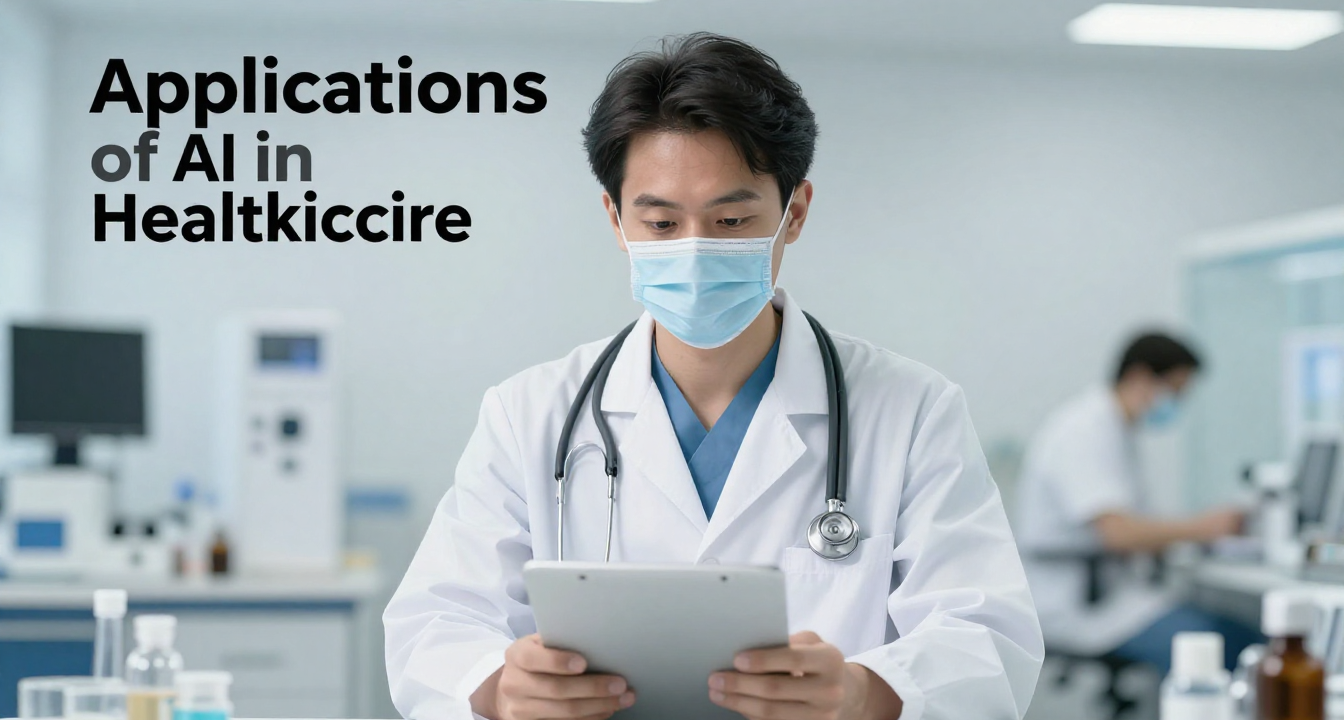
Artificial intelligence is revolutionizing how doctors treat patients and how hospitals run their daily operations. From diagnosing diseases faster to predicting health problems before they happen, AI technology is changing healthcare in ways we never imagined possible. This shift brings real benefits to patients who need care and to healthcare workers who deliver it.
The applications of AI in healthcare are expanding rapidly across every medical specialty. Machine learning algorithms can now analyze medical images like X-rays and CT scans with remarkable accuracy. These systems spot tumors, fractures, and abnormalities that human eyes might miss. When doctors use AI alongside their own expertise, they catch diseases earlier and start treatment sooner. This combination of human judgment and artificial intelligence creates better outcomes for patients facing serious health challenges.
One of the most exciting applications of AI in healthcare involves personalized medicine. Instead of treating every patient with the same medication or therapy, AI systems analyze your unique genetic makeup and medical history. They recommend treatments specifically designed for your body and condition. This approach reduces side effects and improves the chances that treatment will actually work. Patients benefit from therapies chosen just for them, not from a one-size-fits-all approach.
AI-Powered Diagnostic Systems
Diagnostic accuracy is crucial in healthcare, and artificial intelligence excels at this task. AI systems trained on millions of medical images can detect patterns that indicate disease. Pathologists use AI to analyze tissue samples with incredible precision. Radiologists work with AI tools that highlight suspicious areas in scans, helping them focus their attention where it matters most. These technological helpers don’t replace doctors—they enhance their abilities and help them make faster, more confident decisions.
Cancer detection represents a major success story for applications of AI in healthcare. AI algorithms can identify early-stage cancers in mammograms and colonoscopy images better than many human radiologists. When cancer is caught early, survival rates improve dramatically. Patients get more treatment options and better chances for recovery. This life-saving capability shows why healthcare systems worldwide are investing in artificial intelligence technology.
Virtual Health Assistants and Patient Monitoring
AI chatbots and virtual assistants are changing how patients access healthcare information. You can ask a virtual health assistant questions about your symptoms at any time of day. These AI systems provide preliminary guidance and help you decide whether you need to see a doctor. While they don’t replace medical professionals, they reduce unnecessary emergency room visits and help patients get answers quickly.
Remote patient monitoring represents another powerful application of AI in healthcare. Wearable devices track your heart rate, blood pressure, and activity levels. AI algorithms analyze this data and alert your doctor if something seems wrong. Patients with chronic conditions like diabetes or heart disease benefit greatly from continuous monitoring. They stay healthier because problems get caught and treated before they become serious.
Drug Development and Research
Creating new medicines traditionally takes years and billions of dollars. Artificial intelligence is speeding up this process dramatically. AI systems screen millions of molecular compounds to identify promising drug candidates. They predict how different substances will interact with disease-causing proteins. Researchers can now test ideas in computers before building them in laboratories. This accelerates the entire drug development pipeline, bringing life-saving medications to patients faster.
The applications of AI in healthcare also include predicting which patients are at highest risk for certain diseases. By analyzing electronic health records, AI identifies patterns that doctors might not notice. A patient might have several small risk factors that together add up to significant danger. AI flags these individuals so doctors can provide preventive care before serious problems develop. This predictive power lets healthcare providers be proactive rather than reactive.
Operational Efficiency in Healthcare Systems
Hospitals and clinics handle massive amounts of paperwork and scheduling. AI systems streamline these administrative tasks, freeing up staff to focus on patient care. Appointment scheduling becomes smarter when AI predicts no-shows and adjusts bookings accordingly. Medical billing becomes more accurate when artificial intelligence catches coding errors automatically. These efficiency gains save money and improve the patient experience.
| Application Area | Key Benefits | Healthcare Impact |
|---|---|---|
| Medical Imaging Analysis | Faster diagnosis, higher accuracy | Earlier disease detection |
| Personalized Medicine | Targeted treatments, fewer side effects | Better patient outcomes |
| Virtual Assistants | 24/7 access, reduced ER visits | Improved accessibility |
| Drug Development | Faster research, lower costs | New medications available sooner |
| Patient Monitoring | Continuous tracking, early alerts | Preventive care opportunities |
| Administrative Tasks | Automated scheduling and billing | Reduced costs and errors |
Challenges and Considerations
While the applications of AI in healthcare show tremendous promise, challenges remain. Privacy concerns arise when AI systems handle sensitive medical information. Hospitals must ensure patient data stays secure and protected. The technology also requires significant investment in training staff and updating computer systems. Some doctors worry that over-reliance on AI might reduce their clinical judgment skills. These concerns are legitimate and worth addressing as healthcare systems implement artificial intelligence.
Another challenge involves making sure AI systems work fairly for all patients. If training data comes mostly from one group of people, the AI might not work as well for everyone else. Healthcare organizations must carefully test AI applications with diverse patient populations. This ensures that artificial intelligence benefits all patients equally, regardless of their background or where they live.
The Future of AI in Healthcare
The applications of AI in healthcare will continue expanding in exciting directions. Robotic surgery systems guided by artificial intelligence are already performing complex procedures with incredible precision. Gene therapy applications could use AI to design custom treatments for rare genetic diseases. Mental health applications might include AI therapists available 24/7 for patients needing support.
Healthcare systems that embrace artificial intelligence today are positioning themselves for success tomorrow. Patients benefit from faster diagnoses, better treatments, and more personalized care. Doctors get
Machine Learning Algorithms Revolutionizing Medical Diagnosis and Treatment Planning
Healthcare has entered a transformative era where intelligent computer systems analyze medical data in ways humans never could before. These advanced technologies are changing how doctors identify diseases, plan treatments, and predict patient outcomes. The revolution happening right now in hospitals and clinics worldwide demonstrates how technology and medicine work together to save lives.
How Smart Systems Learn to Spot Disease
Machine learning algorithms work like highly trained medical detectives. They examine thousands of medical images, test results, and patient records to learn patterns that indicate disease. When you feed these systems information about previous patients, they become better at recognizing warning signs that might escape human eyes.
Consider how these algorithms handle X-rays and CT scans. A radiologist might review hundreds of images per day, and fatigue can lead to missed details. Machine learning systems never tire. They can examine every pixel of an image simultaneously, flagging potential problems with remarkable accuracy. Studies show these systems sometimes catch early-stage cancers, heart problems, and lung diseases before experienced doctors spot them.
The technology works particularly well with structured data like lab results and vital signs. When algorithms analyze glucose levels, blood pressure readings, and cholesterol counts together, they identify diabetes risk long before symptoms appear. This early detection allows doctors to intervene with lifestyle changes and medications that prevent serious complications.
Personalizing Treatment Plans for Individual Patients
Every person’s body responds differently to medical treatments. What works perfectly for one patient might cause problems for another. Smart algorithms are changing this one-size-fits-all approach by creating customized treatment plans based on your unique characteristics.
These systems analyze your genetic information, medical history, current medications, and lifestyle factors to predict which treatments will work best for you. If you have cancer, algorithms can examine your tumor’s genetic makeup and recommend the specific drugs most likely to destroy it. This approach reduces trial-and-error prescribing and gets you on effective treatment faster.
Machine learning also helps doctors decide treatment intensity. For some patients, aggressive chemotherapy makes sense. For others, lighter treatment combined with careful monitoring produces better outcomes with fewer side effects. Algorithms crunch enormous amounts of data from similar patients to guide these critical decisions.
Predicting What Happens Next
Doctors want to know if a patient will improve, stay stable, or get worse. Machine learning systems excel at this kind of prediction. By analyzing patterns from thousands of previous patients, these algorithms forecast future health outcomes with surprising accuracy.
Hospital staff can use these predictions to provide extra monitoring for high-risk patients. Someone predicted to have a heart attack in the next few days receives closer observation and preventive care. Patients likely to develop complications after surgery get special attention during recovery. These predictions transform reactive medicine into proactive medicine where problems get prevented rather than treated after they occur.
The algorithms also predict which patients will skip appointments or stop taking medications. Healthcare teams can reach out with reminders and support, improving treatment success rates significantly.
Real-World Medical Applications Today
Machine learning isn’t a future technology in healthcare—it’s already working in hospitals right now. Let’s look at specific ways these systems help patients:
- Diabetic Retinopathy Detection: Algorithms identify eye damage from diabetes from photographs, preventing blindness in developing countries where eye doctors are scarce
- Sepsis Prediction: Hospitals use AI to spot patients developing dangerous blood infections hours before traditional warning signs appear
- Drug Discovery: Instead of testing millions of compounds, algorithms identify promising candidates, cutting drug development time and costs dramatically
- Pathology Analysis: Systems scan tissue samples to identify cancer types and grades, helping pathologists work more efficiently
- Mental Health Assessment: Algorithms analyzing speech patterns and written responses help identify depression, anxiety, and suicide risk
Challenges in Healthcare AI Implementation
Despite impressive results, machine learning in healthcare faces real obstacles. Medical data contains sensitive patient information requiring careful protection. Algorithms trained on data from one population might perform poorly for different groups. Doctors sometimes distrust recommendations they don’t fully understand, and regulatory agencies move slowly to approve new technologies.
Data quality matters tremendously. If training data contains errors or biases, the algorithms learn those mistakes. Healthcare organizations must invest in clean, well-organized data before expecting good results. They also need medical professionals to work alongside computer scientists—doctors understand medicine while engineers understand technology.
The Partnership Between Humans and Machines
The best healthcare outcomes happen when doctors work together with smart algorithms. Computers excel at analyzing massive amounts of data quickly, while humans bring judgment, empathy, and contextual understanding. A machine might flag that a treatment rarely works, but a doctor knows this particular patient’s values and preferences matter more than statistics.
Radiologists aren’t being replaced by AI—instead, they’re being freed from routine scanning tasks to focus on complex cases requiring clinical judgment. Pathologists spend less time looking for obvious abnormalities and more time on challenging diagnoses. This partnership makes healthcare more efficient and allows experienced professionals to work where they add the most value.
Looking Forward in Medical Technology
The applications of AI in healthcare will expand as the technology matures. Natural language processing will extract information from doctor’s notes automatically. Wearable devices will continuously monitor your health and feed data to algorithms that catch problems early. Robots guided by machine learning will perform increasingly complex surgeries with precision impossible for human hands alone.
The fundamental goal stays constant: getting you the right diagnosis, right treatment, and right support at exactly the right time. Machine learning algorithms are powerful tools helping doctors achieve this goal for more patients than ever before. As this technology continues developing, expect healthcare to become more accurate, more personalized, and more focused on preventing disease rather than simply treating it after it develops.
Robotic Automation and Surgical Precision in Operating RoomsWhen you walk into a modern operating room today, you might notice something remarkable: surgeons working alongside advanced robotic systems that move with incredible precision. These machines represent one of the most transformative applications of AI in healthcare, revolutionizing how doctors perform complex surgical procedures. The integration of robotic automation into operating rooms has fundamentally changed surgical outcomes, patient recovery times, and the overall quality of care.
Robotic surgical systems amplify the natural abilities of surgeons by providing enhanced visualization, improved dexterity, and steady-handed precision that exceeds human capability. When a surgeon uses these systems, they sit at a console and control robotic arms that translate their hand movements into precise actions inside the patient’s body. This means smaller incisions, less trauma to surrounding tissues, and faster healing times for patients. The technology captures every subtle movement the surgeon makes and executes it with mechanical perfection, eliminating the tremors and limitations that come with manual surgery.
The applications of AI in healthcare through surgical robotics extend far beyond just making cuts more precise. These systems use artificial intelligence to analyze real-time data during surgery, helping surgeons identify critical structures and potential complications before they happen. AI algorithms can recognize anatomical variations between patients and alert surgeons to these differences instantly. This intelligent support system acts like a highly trained assistant who never gets tired and never misses important details.
How Surgical Robots Improve Patient Outcomes
When you choose robotic-assisted surgery, you benefit from multiple advantages that traditional surgery cannot match. The enhanced visualization provided by these systems means surgeons see the surgical field in high definition with magnified views, sometimes up to 12 times larger than the human eye can see. This clarity allows them to work with remarkable accuracy, preserving healthy tissue and removing only what needs to be removed.
The precision of robotic systems directly impacts your recovery. Minimally invasive surgery creates smaller incisions, which means less bleeding, reduced infection risk, and minimal scarring. Patients typically spend less time in the hospital and return to normal activities faster than those who undergo traditional open surgery. Studies show that robotic-assisted procedures often result in shorter recovery periods and less post-operative pain.
Another significant benefit comes from the system’s ability to filter hand tremors. Even the most skilled surgeon’s hands naturally shake slightly, especially during long procedures. Robotic systems eliminate this tremor entirely, allowing for movements accurate to fractions of a millimeter. This level of precision proves especially valuable when working near delicate structures like nerves or blood vessels.
Real-Time AI Integration in the Operating Room
Modern operating rooms now feature AI systems that work continuously throughout surgery. These intelligent programs analyze thermal images, ultrasound data, and other vital information to provide surgeons with actionable insights. The applications of AI in healthcare become particularly powerful when these systems learn from thousands of previous surgeries, identifying patterns and potential complications before they develop.
Imagine a surgical AI that recognizes when tissue quality looks abnormal or when bleeding patterns suggest a particular issue. This information appears on the surgeon’s screen in real time, allowing them to adjust their approach immediately. The technology doesn’t replace the surgeon’s judgment; instead, it enhances their decision-making by providing data they couldn’t possibly gather manually.
Voice recognition features within robotic surgical systems allow surgeons to control certain functions without using their hands, keeping them focused on the procedure. They can adjust camera angles, change instrument functions, or request specific information simply by speaking commands. This hands-free control increases efficiency and reduces the time spent on any particular surgery.
Types of Procedures Benefiting from Robotic Precision
The applications of AI in healthcare through robotic surgery span numerous medical specialties. Cardiac surgeons use these systems to repair heart valves and perform coronary artery bypass grafts with unprecedented precision. Gynecologists perform hysterectomies and other procedures with minimal invasion, reducing patient discomfort significantly. Urologists use robotic systems for prostate cancer surgery, achieving better cancer removal while preserving surrounding tissue that affects quality of life.
Orthopedic surgeons now employ robotic systems to place joint replacements with perfect alignment. Gastrointestinal surgeons use these tools for complex procedures involving the stomach, intestines, and other organs. Even neurosurgeons performing delicate brain surgery benefit from the steady precision these systems provide. Each specialty has discovered unique ways to leverage robotic automation for better surgical outcomes.
| Healthcare Application | Current Impact | Key Benefit |
|---|---|---|
| Medical Image Analysis | Detecting cancers and heart disease | Earlier diagnosis and better outcomes |
| Treatment Recommendation | Personalizing cancer and chronic disease therapy | Better patient response and fewer side effects |
| Medical Specialty | Common Robotic Procedures | Key Benefits |
|---|---|---|
| Cardiac Surgery | Valve Repair, CABG, Arrhythmia Treatment | Reduced trauma, faster recovery, smaller scars |
| Urology | Prostatectomy, Nephrectomy, Cystectomy | Precision removal, tissue preservation, quick recovery |
| Gynecology | Hysterectomy, Fibroid Removal, Endometriosis Treatment | Minimal scarring, reduced bleeding, faster healing |
| Orthopedics | Joint Replacements, Arthroscopic Procedures | Perfect alignment, optimal component placement |
| General Surgery | Gastrectomy, Colectomy, Cholecystectomy | Enhanced visualization, precise tissue handling |
Safety Features and Error Prevention
When considering the applications of AI in healthcare, safety remains paramount. Robotic surgical systems include multiple layers of protection designed to prevent errors and keep patients safe. Force-feedback technology allows surgeons to feel resistance when instruments contact sensitive structures, providing sensory information that guides their decisions.
The systems prevent movements that would exceed safe boundaries. If a surgeon accidentally makes a movement that could harm surrounding tissue, the robotic system restricts that action automatically. This built-in safety mechanism protects patients even if the surgeon makes an unintended motion.
AI-Powered Drug Discovery and Accelerated Pharmaceutical Development
The pharmaceutical industry is undergoing a revolutionary transformation. Artificial intelligence is reshaping how scientists discover new drugs and bring them to market faster than ever before. This shift is changing the game for patients waiting for life-saving treatments and for companies investing billions in research and development.
Traditional drug discovery takes years of work and enormous amounts of money. Researchers manually test thousands of compounds to find ones that might work against diseases. This process can take over a decade from initial discovery to FDA approval. The costs are staggering, often exceeding two billion dollars for a single drug. AI is fundamentally changing this timeline and expense by automating many steps and identifying promising candidates with remarkable speed and accuracy.
How Artificial Intelligence Speeds Up Drug Discovery
Machine learning algorithms can analyze massive amounts of chemical and biological data in days instead of months. These systems learn patterns from existing drug databases and can predict which new compounds will be effective against specific diseases. Scientists feed the AI information about molecular structures, genetic sequences, and past treatment outcomes. The technology then identifies connections that human researchers might miss.
Computer models powered by AI can simulate how drugs interact with disease targets at the molecular level. This virtual testing eliminates countless physical experiments that would otherwise require expensive lab space and time. Researchers can narrow down millions of possible compounds to just a few hundred promising candidates before any human testing occurs. This pre-filtering saves months of work and protects resources for the most viable options.
Deep learning networks have become particularly useful for understanding protein structures. These networks can predict how proteins fold and interact with drug molecules. Knowing protein structures is crucial because drugs must fit perfectly into specific protein shapes to work effectively. DeepMind’s AlphaFold has revolutionized this field by predicting protein structures with stunning accuracy, eliminating years of experimental work.
Real-World Success Stories in Pharmaceutical Development
Several companies have already demonstrated AI’s power in accelerating drug discovery. Exscientia used AI to discover a drug for obsessive-compulsive disorder in just four and a half months, a timeline that would normally take years. The company’s AI platform designed the molecule, predicted its effectiveness, and identified the best way to synthesize it.
Another breakthrough came from the collaboration between MIT researchers and AI companies who discovered a new antibiotic using machine learning. The AI analyzed millions of compounds from chemical libraries and found a molecule that could kill antibiotic-resistant bacteria. This finding opened doors to treating infections that modern medicine previously couldn’t handle.
Cancer research has also benefited tremendously from AI-powered approaches. These systems can analyze genetic mutations and predict which drugs will work best for specific cancer types in individual patients. This personalized medicine approach means patients receive treatments tailored to their unique tumor profiles, improving survival rates and reducing harmful side effects.
Challenges and Considerations in AI-Driven Research
Despite impressive progress, using AI in drug discovery comes with real challenges. AI systems require enormous amounts of quality data to train effectively. If the training data contains biases or errors, the AI will amplify those problems when making predictions about new drugs. Companies must carefully curate and validate their datasets to ensure accuracy.
Regulatory approval remains another significant hurdle. The FDA and other regulatory agencies must verify that AI-discovered drugs are safe and effective through rigorous clinical trials. These trials still require the same careful human testing as traditionally discovered drugs. AI accelerates early stages but cannot skip the essential safety verification steps that protect patients.
The pharmaceutical industry also faces the challenge of integrating AI into existing workflows. Scientists trained in traditional methods must learn to work alongside AI systems. Some researchers worry that over-relying on algorithms might cause them to miss creative approaches that human intuition could uncover. The best results come from combining AI’s computational power with human expertise and creative thinking.
The Cost and Time Benefits You Should Know About
The financial impact of AI-powered drug discovery is substantial. Companies can potentially cut development costs by thirty to forty percent in early stages. More importantly, getting drugs to patients years earlier can save thousands of lives. For rare diseases affecting small patient populations, AI makes research economically viable when traditional approaches would never justify the investment.
Consider how AI is reducing the time to develop treatments for previously untreatable conditions. Patients with genetic diseases that currently have no cure might see hope through AI-discovered therapies within the next five years. The technology is democratizing drug discovery by making research more accessible to smaller biotech companies that lack the resources for traditional large-scale screening operations.
Future Directions for AI in Pharmaceutical Innovation
The next frontier involves AI systems that can design completely novel drug molecules from scratch. Rather than searching existing compound libraries, these systems will imagine new chemical structures optimized for specific diseases. Generative AI models are already showing promise in creating entirely new molecular architectures that human chemists never considered.
Integration with genomics is another exciting direction. AI can match genetic profiles of patients with drugs most likely to help them. This approach maximizes treatment effectiveness and minimizes adverse reactions by tailoring medicines to individual genetic makeup. Personalized medicine powered by AI will transform how we treat diseases from cancer to rare genetic disorders.
Collaboration between academic institutions and pharmaceutical companies will accelerate progress. Nature and other scientific publications increasingly feature AI-discovery research, creating a feedback loop where breakthroughs inspire new applications. Open-source AI platforms will make these tools available to researchers worldwide, not just wealthy corporations.
Ethical Considerations and Future Challenges in Healthcare AI Implementation
Artificial intelligence has become a transformative force in healthcare, helping doctors diagnose diseases faster and improving patient outcomes. However, as healthcare AI continues to grow, important ethical questions emerge that we must address. Understanding these concerns is crucial for anyone involved in healthcare technology, from developers to patients themselves.
When healthcare professionals use AI systems to make medical decisions, they need to know how these systems work. Explainability means understanding why an AI model made a particular recommendation. If an AI system suggests a specific treatment but cannot explain its reasoning, doctors face a real problem. They may not feel confident trusting the recommendation, and patients have a right to understand the factors influencing their care. This lack of transparency can damage the relationship between patients and healthcare providers, making it harder for people to accept AI-assisted treatments.
Data privacy represents one of the most pressing concerns in healthcare AI implementation. Medical records contain incredibly sensitive information about your health history, genetic makeup, and personal circumstances. When hospitals and clinics use AI systems, they must handle this data with extreme care. Breaches could expose millions of people’s private health information to criminals or unauthorized parties. Healthcare organizations must implement strong security measures, but even the best systems can face attacks from determined hackers. The challenge becomes balancing innovation with protection, ensuring that AI systems can learn from data while keeping that data secure.
Bias and Fairness in Medical Decision-Making
AI systems learn from historical data, and that data often reflects existing biases in healthcare. If a training dataset contains more information about one demographic group than another, the AI may perform poorly for underrepresented populations. For example, some AI diagnostic tools have shown lower accuracy rates for women and people of color because the training data was skewed toward other groups. This creates a serious equity problem. Patients who belong to underrepresented groups might receive less accurate diagnoses or inappropriate treatment recommendations, perpetuating healthcare disparities that already exist.
Addressing bias requires careful attention throughout the AI development process. Developers must examine their training data for representational gaps and actively work to include diverse populations. Healthcare institutions need to test AI systems across different patient groups before deployment. Regular audits after implementation help catch problems that might emerge in real-world use. Without these safeguards, AI can amplify existing inequalities rather than improve healthcare for everyone.
Accountability and Liability Questions
When something goes wrong in healthcare, someone must take responsibility. Traditional medical liability is clear—the doctor bears responsibility for their decisions. But what happens when an AI system provides a flawed recommendation that leads to patient harm? Is the responsibility on the developer who created the software, the company that deployed it, the hospital that used it, or the doctor who followed its suggestion? This accountability gap creates uncertainty that makes hospitals hesitant to adopt AI, even when it could help patients.
Legal frameworks haven’t caught up with healthcare AI development. Different countries have different approaches to regulating medical AI, creating confusion for global healthcare companies. Some regions require extensive approval processes before AI tools can be used clinically, while others have minimal oversight. Healthcare providers need clear guidelines about when they can use AI, how to document its use, and what happens if something goes wrong. Without these clear rules, implementing AI becomes legally risky.
Workforce Disruption and Changing Professional Roles
Healthcare professionals worry about how AI will affect their jobs and careers. Some fear that automated systems might replace radiologists, pathologists, or other specialists. While complete replacement seems unlikely, AI will definitely change how these professionals work. Instead of analyzing hundreds of medical images alone, radiologists might supervise AI systems that flag potential problems. This transformation requires retraining and skill development that takes time and resources.
The healthcare workforce also faces shortages in many regions, and introducing AI creates additional pressure. Training programs need to teach medical students how to work alongside AI systems. Existing professionals need opportunities to learn new skills. Healthcare organizations must invest in professional development to help their teams adapt to technology changes. Without these investments, you might see increased frustration and resistance to adopting AI systems, slowing progress in patient care improvements.
Maintaining Human Oversight and Control
As AI systems become more sophisticated, maintaining meaningful human oversight becomes increasingly difficult. When an AI model operates like a “black box,” making decisions based on patterns humans cannot fully understand, clinicians struggle to verify that recommendations make sense. Over-reliance on AI can cause physicians to stop using their own clinical judgment, leading to potential mistakes that might have been caught by experienced professionals.
Healthcare organizations must establish clear protocols ensuring that trained medical professionals always maintain decision-making authority. AI should enhance human expertise, not replace it. Clinical teams need time to review AI recommendations carefully, especially in critical cases. This requires proper staffing and workflow design—something that hospitals might struggle with if they see AI primarily as a cost-saving measure rather than a tool to support better care.
Data Quality and Consent Challenges
Healthcare AI depends on large amounts of high-quality data to function effectively. However, obtaining this data raises important consent questions. When patients visit healthcare facilities, they expect their information to be used for their care. Many didn’t explicitly agree to have their data used for AI research and development. Modern regulations like the General Data Protection Regulation (GDPR) and Health Insurance Portability and Accountability Act (HIPAA) require informed consent, but implementing this in practice proves complicated.
People have different comfort levels with data sharing. Some might happily contribute their health information if they understood it would lead to better treatments for everyone. Others might refuse, even if benefits existed. Healthcare systems must find ways to gather robust training data while respecting patient preferences and privacy. This balance isn’t easy to achieve, especially when commercial interests push for maximum data collection.
Ensuring data quality presents another significant challenge. Healthcare data comes from various sources using different formats and standards. Some information might be incomplete or inaccurate. If AI systems train on poor-quality data, their recommendations become unreliable. Cleaning and standardizing data takes considerable time and expert knowledge, which healthcare organizations must budget for properly.
Regulatory Frameworks and Global Implementation
Different countries regulate medical AI in vastly different ways. The United States Food and Drug Administration (FDA) reviews some AI applications, while others receive minimal oversight. Europe has stricter regulations through GDPR and specific AI regulations. Developing nations often lack established frameworks entirely. This patchwork of regulations creates challenges for companies developing healthcare AI and for hospitals trying to implement it globally.
Clear, consistent regulatory frameworks benefit everyone. They establish baseline standards for safety and effectiveness, protecting patients from harmful systems. They also provide clarity for developers, making it easier to navigate the approval process. However, creating these





No Comments